Header logo
header top contact widget
 call us at
dental specialist
Study Links Pancreatic Cancer And Oral Health
Posted on Jan 02, 2017 by William J. Claiborne, DDS MS
Numerous studies have found links between oral bacteria and serious health problems that extend far beyond the mouth. The inflammation triggered by infectious oral bacteria have been linked to heart disease, arthritis, diabetes, stroke, high blood pressure, preterm babies and even impotency.
Now, findings from one study reveal periodontal (gum) disease bacteria as a potential contributor to pancreatic cancer. While this has been suspected from the results of previous studies, this long-term study focused primarily on how the risk exists.
The study analyzed DNA from saliva samples from over 360 adults who eventually developed pancreatic cancer. Researchers compared these samples to the DNA in saliva of a similar number of adults who remained healthy.
Adjustments were made in both groups for variations in age, race, sex and body mass as well as alcohol use, smoking and being diabetic. Subjects who developed pancreatic cancer within two years after the DNA samples were taken were omitted to eliminate pre-existing factors that could influence statistical outcomes.
With the findings from prior research, this study allowed researchers to zero in on two specific types of periodontal disease pathogens. Researchers noted that one pathogen was more prevalent in the saliva of participants who developed pancreatic cancer, who showed a fifty-nine percent greater risk of developing pancreatic cancer. The second pathogen was shown to increase this risk by fifty percent.
Because it is typically not diagnosed until at advanced stages, pancreatic cancer has a deadly track record. This year, over 50,000 people will be diagnosed with pancreatic cancer. Less than ten percent will survive more than five years.
For years, research showed that the infectious bacteria of periodontal disease could enter the bloodstream through tears in diseased gum tissues. It was found to be a trigger for inflammatory reactions elsewhere in the body. This has been linked to heart disease, stroke, high blood pressure, diabetes, arthritis, preterm babies, impotency and other cancers.
In early stages, periodontal disease begins with tender gums that bleed easily when brushing and frequent bad breath. As it progresses, the gums become tender and swollen, deepen in color from a healthy pink to red, and cause persistent bad breath. Eventually, teeth will loosen and may require removal. Because over sixty-five percent of American adults have some level of periodontal disease, it is the nation’s leading cause of adult tooth loss.
Hopefully, the general public will learn of extensive research results that show that periodontal disease bacteria is destructive and deadly. As findings from further studies continue to be revealed, it is important to be proactive when it comes to the symptoms of periodontal disease. Remember, gum disease will only worsen without treatment.
Call 828-274-9440 to arrange a consultation. I’ll be happy to answer your questions and recommend ways to help you achieve a healthy, confident smile.
Why Replace A Back Tooth That’s Not Visible In A Smile?
Posted on Dec 22, 2016 by William J. Claiborne, DDS MS
A great smile is always a welcome sight. It reflects a positive side of one’s personality and projects a warmth that is often contagious!
When a tooth is missing that’s visible in a smile, however, it sends a negative message. People tend to associate a gap in a smile with lower standards. In one study, 200 participants ages 19 to 50 were shown photographs of smiling individuals, some whom were missing a tooth or teeth. The participants ranked the people in the photos on attractiveness, health, education, satisfaction with life, social life, intelligence, and other traits.
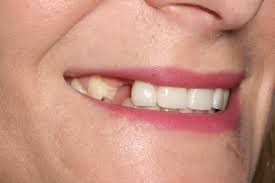
Just one missing tooth can lead to many future problems.
The findings of the study (published by the National Institutes of Health: https://www.ncbi.nlm.nih.gov/pubmed/18556899) suggested a person missing visible teeth was more negatively perceived on all social traits than a person with a full smile.
When a back tooth is missing and not visible in a smile, some people perceive that it’s not necessary to replace it. Although it can’t be seen, your back teeth have an important role in your oral well-being. A big one.
Each tooth helps to keep other teeth in their proper positions. When an empty space exists beside a tooth or above (or below), the neighboring teeth tilt out of proper alignment. The teeth on each side tilt and the tooth above or below grows longer.
What occurs as a result is a domino effect. Since the teeth are now misaligned, they meet other teeth without the harmonious fit they were designed to have. Thus, the result is often chips, cracks or broken teeth. But, it can get worse.
When a bite becomes misaligned, the jaw joints react. These joints (referred to as TMJ) can become strained and stressed as a result of bite misalignment. This can lead to night-time clenching and grinding as the jaw moves around trying to find a harmonious position.
Clenching and grinding can result in frequent headaches, migraines, dizziness, ear ringing, worn teeth, sore jaw joints and difficulty opening the mouth fully. Because many of these symptoms are not always perceived to be related to bite misalignment, people are often mis-diagnosed.
While all these issues can easily be avoided by replacing a missing tooth, how it is replaced is also important. When a tooth is replaced by a crown-&-bridge combination, the teeth on each side must be crowned to serve as supports for the replacement tooth (or teeth). To shave down otherwise healthy teeth for the sole purpose of supporting a bridge is not necessary with Dental Implants.
Dental Implants are positioned in the jaw bone, recreating the presence of a tooth root. This gives your replacement tooth (or teeth) the same dependable foundation that your natural teeth have. Too, the presence of the implant in the bone helps you avoid the bone loss that occurs when tooth roots no longer exist in the jaw.
Another bonus of Dental Implants is their “one and done” appeal! Dental Implants are designed to last a lifetime, making them an excellent investment. Additionally, implants will never require root canals, cavity repair or other work traditionally associated with crown-&-bridge.
The best time to have a Dental Implant placed is when the tooth or teeth are extracted. This way, implant placement can be a simple process since the insertion point is already prepared. A Periodontist is a dental specialist who has advanced training in the selection of the implant type best suited for you as well as specific expertise in placement.
If you’re missing a back tooth or teeth, let’s discuss replacing them before you endure a lengthy list of repercussions. Call 828-274-9440 to arrange a consultation.
Smokers – Why Your Smile Needs You To Quit!
Posted on Dec 13, 2016 by William J. Claiborne, DDS MS
The new year is right around the corner. For many Americans, we are contemplating New Year’s Resolutions. Common resolutions are losing weight, getting fit and to quit smoking. 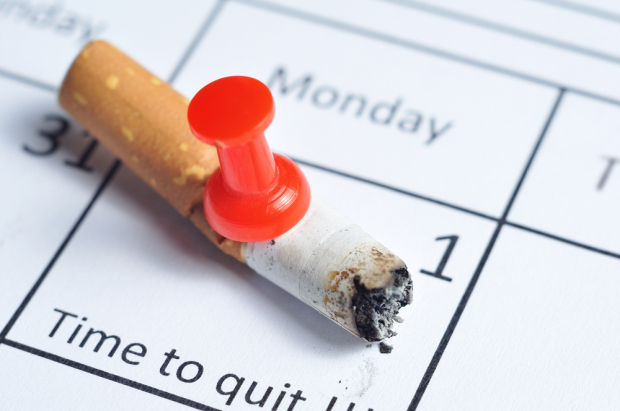 For those who smoke, the beginning of a new year is a good place to reclaim their health.
If you smoke, however, you probably don’t feel like another lecture about its hazards. In our office, we pride ourselves on being a ‘lecture-free zone,’ so you won’t get one here. However, as a Periodontist, I probably have a better picture of what it’s doing inside your mouth so allow me a minute to give you that information. No lectures, though — promise.
When it comes to your smile, smokers have a greater risk of periodontal (gum) disease, more frequent bad breath, higher plaque levels, stained teeth, and slower healing following extractions, gum treatment and oral surgery.
Smoking has a drying effect on oral tissues, which provide an ideal environment for oral bacteria to breed. As oral bacteria accumulate in the mouth, the infectious bacteria inflame the gum tissues. This is the beginning of gum disease.
In early stages, gum disease causes persistent bad breath, sore gums and gums that bleed easily when brushing. As it progresses, gum tissues darken in color and pus pockets form at the base of teeth. Eventually, oral bacteria attack supporting bone and tissues surrounding tooth roots, causing teeth to loosen. It’s no surprise that gum disease is the nation’s leading cause of adult tooth loss.
Losing teeth is very detrimental to your overall health. Although some people assume that losing natural teeth is a ‘normal’ part of the aging process, studies now show that people who wear dentures die an average of ten years earlier than those with natural teeth. Denture wearers take more medications, have more gastrointestinal problems and are less socially involved.
On average, smokers decrease life expectancy by 10–15 years. Smoking is attributed to nearly one-third of all cancer diseases and deaths. Pregnant women who smoke have an increased risk for first-trimester spontaneous abortion, preterm births, low birth weight babies and sudden infant death syndrome (SIDS). Women who smoke are at risk for early menopause while men who smoke have a higher risk of impotency.
For those who decide to kick the habit, the positive effects are almost immediate. In 48 hours, damaged nerve endings start to regrow. The sense of smell and taste begin to return to normal. In 3 days, the lungs begin to repair and breathing is easier and with fuller air intake. Within 2 weeks, blood circulation in your gums and teeth is similar to that of a non-smoker. Your heart attack risk is now also declining. In a month or so, your circulation greatly improves, walking is easier and your chronic cough is gone.
The incentive to quit, for some adults, is because they realize their loved ones are breathing in their ‘second-hand smoke.’ Second hand smoke contains no less than 50 known carcinogens and other harmful chemicals. Children of smoking parents commonly wake up with ‘smoker’s cough.’
Rather than lecture, we believe it is more helpful to share the facts so adults can choose as they feel best. Some smokers accept the risks for the sake of their habit, and that’s their right. However, for those who truly wish to overcome this addiction, there are excellent online sources.
A good one is: http://smokefree.gov/
Best of luck in your 2017 goals!
Surprising Oral Health Risks From Holiday Celebrations
Posted on Dec 05, 2016 by William J. Claiborne, DDS MS
The holiday season is a wonderful opportunity to enjoy friends, family and yummy indulgences. Rich food and alcoholic beverages are common features of these gatherings. However, you may be surprised to learn just how risky these gatherings can be when it comes to your smile. But, don’t despair. The precautions below can lower your risk for cavities, bad breath and gum disease.
Alcoholic beverages – Alcohol (including beer, wine and liquor) has a drying effect on oral tissues. Without sufficient saliva flow, oral bacteria is not being efficiently rinsed from the mouth. The more bacteria in your mouth, the more are there to reproduce. This leads to bad breath and can progress to gingivitis (an initial stage of gum disease).
When sugary mixers are added to alcohol, you increase your potential for developing cavities and gum disease even more. And, while wine may seem a healthier choice, it’s anything but smile-friendly. Red wine is known to stain teeth. Even white wine has a tint and can contribute to discoloration.
Wine is also highly acidic. When this acid mixes with digestive acids in the mouth (naturally produced each time you eat or drink), you get a one-two punch of acid that can erode tooth enamel. As a matter of fact, this acid level is so potent it can soften enamel in a mere ten minutes after that initial sip of wine.
The good news is that you CAN minimize the risks to your smile. First, ask for a glass of water along with your cocktail and take several swallows every 10-15 minutes. To dilute the acid’s intensity, allow the water to wash over your teeth before swallowing or swish with water in the restroom between drinks.
Hors d’ouevres – Cocktail party nibbling can go on for hours as you sample rich, holiday finger foods. These are often sugary or carbohydrate-laden. As mentioned prior, every time you eat or drink, your mouth undergoes an acid attack, which lasts for 20-30 minutes. This means that an acid onslaught began as soon as you bit into that first sugar cookie and will last for as long as you continue to indulge, plus another 20 or so minutes.
To minimize the acid in your mouth, try to consume those goodies in a brief amount of time rather than over the course of the evening. Rather than selecting sweet or starchy nibbles, look for fresh fruit or veggies. An added benefit when you forgo the Yule log and pretzels is that your waistline will be better off, too!
After the party, remember that eating and drinking puts your tooth enamel at risk for 20-30 minutes after your last bite or sip. That’s why it’s best to wait at least that long before brushing. When enamel is softened, the abrasiveness of toothpaste combined with the scrubbing action of a toothbrush can wear away precious enamel. Give the acid levels time to subside before heading to the sink. Tooth enamel, once worn away, is gone for good. Do everything you can to protect it to avoid costly, time-consuming problems in the future.
As you implement simple steps of caution, enjoy the holidays! Call 828-274-9440 to learn how you can enjoy a healthy mouth, fresher breath and prevent problems from occurring in the first place.
Recent Posts
Categories
Archives
- September 2024
- August 2024
- July 2024
- June 2024
- May 2024
- April 2024
- March 2024
- February 2024
- January 2024
- December 2023
- November 2023
- October 2023
- September 2023
- August 2023
- July 2023
- June 2023
- May 2023
- April 2023
- March 2023
- February 2023
- January 2023
- December 2022
- November 2022
- October 2022
- September 2022
- August 2022
- July 2022
- June 2022
- May 2022
- April 2022
- March 2022
- February 2022
- January 2022
- December 2021
- November 2021
- October 2021
- September 2021
- August 2021
- July 2021
- June 2021
- May 2021
- April 2021
- March 2021
- February 2021
- January 2021
- December 2020
- November 2020
- October 2020
- September 2020
- August 2020
- July 2020
- June 2020
- May 2020
- April 2020
- March 2020
- February 2020
- January 2020
- December 2019
- November 2019
- October 2019
- September 2019
- August 2019
- July 2019
- June 2019
- May 2019
- April 2019
- March 2019
- February 2019
- January 2019
- December 2018
- November 2018
- October 2018
- September 2018
- August 2018
- July 2018
- June 2018
- May 2018
- April 2018
- March 2018
- February 2018
- January 2018
- December 2017
- November 2017
- October 2017
- September 2017
- August 2017
- July 2017
- June 2017
- May 2017
- April 2017
- March 2017
- February 2017
- January 2017
- December 2016
- November 2016
- October 2016
- September 2016
- August 2016
- July 2016
- June 2016
- May 2016
- April 2016
- March 2016
- February 2016
- January 2016
- December 2015
- November 2015
- October 2015
- September 2015
- August 2015
- July 2015
- June 2015
- May 2015
- April 2015
- March 2015
- February 2015
- January 2015
- December 2014
- November 2014
- October 2014
- September 2014
- August 2014
- July 2014
- June 2014
- May 2014
- April 2014
- March 2014
- February 2014
- January 2014
- December 2013
- November 2013
- October 2013
- September 2013
- August 2013
- July 2013
- June 2013
- May 2013
- April 2013
- March 2013
- February 2013
- January 2013
- December 2012
- November 2012
- October 2012
- September 2012
- August 2012
- July 2012
- June 2012
Blog banner widget
