Header logo
header top contact widget
 call us at
dental specialist
Wear Dentures? The Problems They Cause You May Not See.
Posted on Aug 24, 2016 by William J. Claiborne, DDS MS
As a Periodontist, my advanced training and skills are ideal for people who have any stage of periodontal (gum) disease as well as those who are seeking dental implants to replace missing teeth.
When it comes to dental implants, I often see patients who have worn dentures for many years. Most are frustrated by the uncomfortable rubbing and inability to eat foods they love.
Patients are perplexed as to why their once-secure denture no longer stays in place, even with the aid of denture adhesives and pastes. For those who have had their denture relined, most are surprised when the denture begins to slip and wobbly yet again.
Unfortunately, when many adults first agree to wearing a denture they are not told what lies ahead. The problem is not obvious since it occurs underneath the gum tissue. The denture is not expanding or changing shape. The change is actually occurring with your jaw bone.
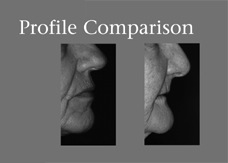
Profiles of healthy jaw bone and jaw that has experienced bone loss.
When natural tooth roots are removed, the jaw bone that once held them no longer receives the stimulants that kept it healthy. In only a year or so, the jaw bone will begin to shrink. This decline in mass also causes changes in facial appearance, such as deep wrinkles around the mouth, a sunken in mouth, and jowls.
With each passing year of wearing a denture, the process of bone loss continues. The ‘ridge’ your denture was custom-designed to contour flattens out. Relines can reshape the denture to accommodate some of the change. However, as the bone continues to decline, the denture’s fit loosens again.
The pressure of wearing a denture merely accelerates the rate of bone loss. For denture wearers who sleep in their denture, the 24-7 pressure accelerates the pace of bone loss even more.
Not being able to eat and fear of embarrassment are common complaints of denture wearers. The solution is dental implants. Dental implants restore the ability to bite and chew comfortably while halting bone loss by recreating the presence of tooth roots.
When people select dental implants to replace an unstable denture, their ability to smile, laugh and eat comfortably and confidently is restored. After all, eating a healthy diet, socializing with friends and family, and feeling confident are essential to a healthy, happy life.
Call 828-274-9440 to schedule a consultation. During this, I’ll explain the type of implants that may be best for your needs and goals. We can also discuss estimated costs and payment options.
Fresh Breath Is Easy To Have!
Posted on Aug 19, 2016 by William J. Claiborne, DDS MS
As we say good-bye to the busy-ness of Summer and settle into more normal routines, it gives us a good time to evaluate our oral health commitment. An advantage of achieving and maintaining a clean, healthy mouth is having confidence when it comes to your breath.
Below are simple tips for fresh breath:
• Drink lots of water. Colas, sweet tea, and energy drinks don’t count. Pure, clean water cleanses the mouth and adds to saliva’s ability to wash bacteria from the mouth. Bottled water, tap water or filtered water (such as Brita) are all helpful.
• Remove oral bacteria from your tongue. The tongue’s grooves provide a perfect haven for bacteria to embed and reproduce. Use a tongue scrapper each day or brush your tongue with your tooth brush at the end of tooth brushing. When your mouth has fewer bacteria, your breath will have a ‘cleaner’ scent and stay fresh longer.
• Enjoy fruits and skip sugary treats. Oral bacteria thrives on acid attacks that occur every time you eat or drink. However, when sugar is present, they become super-charged! Natural sugar in fresh fruits won’t have the same impact.
• Have a cucumber. When your mouth is dry, hold a slice of cucumber against the roof of your mouth for a couple of minutes. This activates more saliva production, which helps cleanse the mouth of particles and bacteria.
Fresh breath gives us more confidence when we are close to others. Whether at work, home with loved ones, or at social gatherings, your breath shouldn’t create an impression that is less-than-flattering.
To ensure your mouth is healthy and oral bacteria are at minimal levels, call for an appointment – 828.274.9440. We’ll help you to feel confident in closeness!
Receded Gums – How They Occur & Why They Up Your Risk For Problems
Posted on Aug 15, 2016 by William J. Claiborne, DDS MS
The next time you look in the mirror, smile. Notice how each tooth is arched by gum tissue. This tissue seals off and protects the tooth root sections of teeth. When the gums pull away from the teeth, darker and sensitive portions of the root are exposed. This leaves tooth roots exposed and vulnerable.
While the darker segments of teeth detract from the appearance of a smile, they are also highly sensitive. Many people often first notice gum recession when getting a painful jolt when eating or drinking something hot or cold or even from the bristles of a tooth brush. Because gum recession occurs gradually, people don’t always notice it until they experience pain.
Special toothpastes may help with sensitivity, however, it’s best to determine what has led to gum recession so further recession doesn’t occur. Causes for receded gums include:
• Periodontal (gum) disease: When bacteria accumulates on teeth at the gum line, the gum tissues weaken and lose their grip on teeth. As gum disease progresses, the tissues and supporting bone are overwhelmed by oral bacteria.
• Rigorous brushing: Using a tooth brush with hard bristles or being over-zealous when brushing can wear down enamel as well as gum tissue. Also, using abrasive substances to brush (such as baking soda) are too gritty for teeth and can wear down gum tissues.
• Poor oral hygiene: Without thorough and regular brushing and flossing, oral bacteria accumulate and form a sticky film known as plaque. When plaque is not removed, it can harden into calculus, which is a cement-like colony of oral bacteria. Calculus (or tartar) can only be removed by a dental professional or it will continue to feed on gum tissues.
• Smoking: When saliva flow is insufficient to effectively wash bacteria from the mouth. The chemicals in tobacco are very drying to oral tissues, providing an ideal environment for the formation of plaque and calculus. Both are masses of oral bacteria that attacks gum tissue and contributes to recession.
• Grinding & clenching teeth: Clenching or grinding teeth during sleep can place such force on teeth that they tilt out of their positions. Eventually, the gums pull away from some teeth, exposing tender tooth root sections.
• Hormonal changes: Pregnancy, menopause and puberty can cause changes in hormone levels. These hormonal fluctuations can cause gums to feel tender and be more vulnerable to recession.
• Crowded or crooked teeth: When teeth are not properly aligned, they endure added force to bite and chew. This can also lead to strain on the TMJ (jaw joints), gums and bone structures that support tooth roots. This can eventually result in gum recession.
When darker portions of a tooth are visible, it detracts from a smile and leaves the tooth susceptible to decay or gum disease. For the comfort, appearance and health of the tooth, repairing the problem before costly damage occurs is the best move.
As a Periodontal Specialist, my specialty is in the treatment of gum tissues, including recontouring procedures that repair recession comfortably and quickly. However, it is important to repair recession before it becomes severe. Treatment delays may result in the need for more-extensive procedures that can increase treatment time and expense.
Call 828-274-9440 to learn more.
Smokers Add Challenges To Dental Implant Success
Posted on Aug 09, 2016 by William J. Claiborne, DDS MS
Not only does smoking complicate the body’s natural ability to heal, it is a particular challenge to oral tissues. The chemicals in cigarette smoke have a drying effect on the gum and decreases blood oxygen levels. This results in slower healing and can lead to a greater risk of bacterial build-up.
In implant placement, both gum tissue and bone are involved in the process. Through gum tissues, I position each implant in the upper or lower jaw bone at a precise depth and angle.
Once the implant is placed, it requires a healing period as the bone grows around it, securing it in place. This process is known as ‘osseo-integration.’ Proper healing requires normal blood circulation and sufficient oxygen levels. Implant failures occur most often during this phase when the bone is growing around the implant.
In addition to smoking’s effects on the rate of tissue and bone recovery, smoking patients can develop a condition known as peri–implantitis. Peri-implantitis leads to inflammation around the implant site and pockets of pus that form in gum tissues. Although the potential to develop peri–implantitis exists for any dental implant patient, smokers have a substantially higher risk.
When smokers develop infections after implant surgery, medications used to combat the infection have a reduced effect. This is because the potency of antibiotics does not work as well on smokers. When infection is not eliminated before it can work its way into the implant area, the risk for losing the implant is significant.
Keep in mind that an implant that must be removed due to the healing complications of smoking is not refundable. This means that the investment you made has gone up in smoke – cigarette smoke.
So many negative effects from smoking make it highly advisable to stop smoking prior to implant placement. If you don’t stop, you can increase your potential for success somewhat by reducing your smoking by half at least one week prior to your placement procedure and throughout the healing period.
Having dental implants allows you to eat the foods you love again and restores eating comfort and smiling confidence. The many benefits you’ll reap with dental implants are well worth kicking the habit. Call 828-274-9440 to schedule a consultation to discuss your potential for a successful outcome.
Recent Posts
Categories
Archives
- September 2024
- August 2024
- July 2024
- June 2024
- May 2024
- April 2024
- March 2024
- February 2024
- January 2024
- December 2023
- November 2023
- October 2023
- September 2023
- August 2023
- July 2023
- June 2023
- May 2023
- April 2023
- March 2023
- February 2023
- January 2023
- December 2022
- November 2022
- October 2022
- September 2022
- August 2022
- July 2022
- June 2022
- May 2022
- April 2022
- March 2022
- February 2022
- January 2022
- December 2021
- November 2021
- October 2021
- September 2021
- August 2021
- July 2021
- June 2021
- May 2021
- April 2021
- March 2021
- February 2021
- January 2021
- December 2020
- November 2020
- October 2020
- September 2020
- August 2020
- July 2020
- June 2020
- May 2020
- April 2020
- March 2020
- February 2020
- January 2020
- December 2019
- November 2019
- October 2019
- September 2019
- August 2019
- July 2019
- June 2019
- May 2019
- April 2019
- March 2019
- February 2019
- January 2019
- December 2018
- November 2018
- October 2018
- September 2018
- August 2018
- July 2018
- June 2018
- May 2018
- April 2018
- March 2018
- February 2018
- January 2018
- December 2017
- November 2017
- October 2017
- September 2017
- August 2017
- July 2017
- June 2017
- May 2017
- April 2017
- March 2017
- February 2017
- January 2017
- December 2016
- November 2016
- October 2016
- September 2016
- August 2016
- July 2016
- June 2016
- May 2016
- April 2016
- March 2016
- February 2016
- January 2016
- December 2015
- November 2015
- October 2015
- September 2015
- August 2015
- July 2015
- June 2015
- May 2015
- April 2015
- March 2015
- February 2015
- January 2015
- December 2014
- November 2014
- October 2014
- September 2014
- August 2014
- July 2014
- June 2014
- May 2014
- April 2014
- March 2014
- February 2014
- January 2014
- December 2013
- November 2013
- October 2013
- September 2013
- August 2013
- July 2013
- June 2013
- May 2013
- April 2013
- March 2013
- February 2013
- January 2013
- December 2012
- November 2012
- October 2012
- September 2012
- August 2012
- July 2012
- June 2012
Blog banner widget
