Header logo

header top contact widget
 call us at
Dry Mouth
Don’t Let Lupus Compromise Your Smile
Posted on Mar 22, 2017 by William J. Claiborne, DDS MS
Over the years, I’ve shared many findings that have revealed links between the infectious bacteria of periodontal (gum) disease to other serious health problems. The culprit tends to originate in how oral bacteria can trigger systemic inflammation elsewhere in the body. Because the bacteria can become bloodborne through tears in weakened gum tissues, it can freely travel throughout the body and lead to chronic inflammatory reactions.
Periodontitis is an advanced stage of periodontal (gum) disease. In the mouth, it causes destructive inflammation that leads to the loss of the structures that support teeth. Eventually, this leads to tooth loss and is the leading cause of adult tooth loss in the U.S.
A person with Lupus, depending on the type of disease, faces a variety of oral health challenges. As an autoimmune disease, Lupus affects the collagen tissue in the entire body. This includes the collagen that exist in the tissues of the mouth. This adds to the problems of Lupus patients with longer healing times required after oral procedures as well as the common symptom of dry mouth.
When a mouth is dry, oral bacteria can more easily accumulate. Having a dry mouth contributes to an increased risk of developing cavities, gum disease and candidiasis, a fungal mouth infection. Dry mouth can cause the gums to become red and leukoplakic lesions to form on gum tissues. These are white, scaly patches that appear on the gum tissues inside the cheeks and/or on the palate and inner border of the lips.
To overcome the challenges of dry mouth, Lupus patients should practice ways to stimulate the production of saliva flow. This can be done by chewing sugarless gum or sucking on sugarless hard candy. They should drink plenty of water throughout the day to keep the mouth wet, preferably taking frequent sips. To soothe dry, cracked lips, a petroleum-based lip balm is recommended.
Dry mouth can be made worse by consuming caffeinated foods and beverages, spicy foods and alcoholic beverages. The worst drying agent to oral tissues is smoking or ‘chew.’
In addition to actions to prevent the problems associated with dry mouth, a saliva substitute may be helpful to replenish low saliva production. These products mimic some of the properties of saliva and help make the mouth feel wet. Some also contain fluoride, which can help to prevent cavities. However, the benefits of saliva products are limited since they are eventually swallowed. Because the effects last only a few hours, it may be necessary to use them several times a day.
Although the challenges that Lupus patients face are many, keeping good oral health can occur by devoting mere minutes to proactive oral health measures. In addition to helping to keep your mouth moist, be committed to a thorough at-home oral hygiene regimen. This includes daily flossing, twice daily brushing (at least two minutes each time), and limiting snacks.
We believe every person, regardless of their challenges, can enjoy a healthy, confident smile. If you have Lupus or any disease that creates hurdles when it comes to your oral health, let us help. Together, we can develop a plan that is appropriate for your individual needs. Call 828-274-9440 to arrange an examination to begin.
Understanding Terms Associated With Gum Disease
Posted on Jan 23, 2017 by William J. Claiborne, DDS MS
Occasionally, I catch myself using dental terminology during patient conversations. As a Periodontist, ‘perio-talk’ is second nature to me. Deep down, however, I know it isn’t always clear to my patients.
I believe that patients are better participants in their oral health when they understand specifics of their individual needs. When I say ‘perio’ instead of ‘gum tissue,’ the patient doesn’t always ask for a better explanation, even though they may not be sure of the term’s meaning. This leaves us both at a loss – the patient doesn’t fully grasp their needs and recommended solution and I have a patient who is unsure of the ‘why’ and ‘how.’
Although dental implant placement and gum recontouring are regular treatments we provide, periodontal (gum) disease is the most frequent problem we treat. Gum disease affects over 47% of American adults and is the nation’s leading cause of tooth loss. It has been linked to heart disease, high blood pressure, stroke, memory loss, arthritis, diabetes, preterm babies and impotency.
Because gum disease begins without obvious symptoms, people often ignore the warning signs. This tends to allow the disease to progress further. As a basic explanation of how gum disease forms, I’ve listed the progression below — with dental terminology omitted!
• Oral bacteria – Bacteria in our mouths is normal. However, an overload of bacteria is how the problem begins. When oral bacteria are not removed on a daily basis, they amass and form plaque.
• Plaque – This is a sticky film that coats teeth and covers the gums and tongue. It can be felt by running the tongue over teeth at the end of the day before you brush. Plaque forms quickly, from the time you brush in the morning to the time of your evening brushing. The presence of plaque signals that your mouth is harboring more bacteria than saliva flow can rinse away. When plaque is not removed on a daily basis, oral bacteria thrive, reproduce, and harden into calculus.
• Calculus – Also known as tartar, calculus is a cement-hard mass of bacteria that develops from plaque. This colony of bacteria attaches to tooth enamel and can only be removed with special instruments used by dental professionals. This is why your 6-month check-ups and cleanings are so important. By preventing the formation of calculus or having it scraped off on a regular basis, you can avoid damage to gums and enamel.
• Gingivitis – This is the first stage of gum disease. Here, oral bacteria reproduce at a rapid rate while attacking gum tissues and tooth enamel. Signs of gingivitis are gums that bleed easily when brushing, sore gums, and frequent bad breath. When tended to promptly, gingivitis can be halted and reversed. Treatment requires twice daily brushing (at least two minutes) with a soft to medium bristle tooth brush and flouride toothpaste. Daily flossing is also needed to remove food particles and bacteria between teeth. Tongue scraping is advised to remove oral bacteria embedded in the grooves of the tongue. An alternative to a tongue scraper is to brush the tongue with your tooth brush. Be sure to get to the back of the tongue where the greatest concentration of bacteria are embedded. Drink lots of water and swish daily with an oral rinse that kills bacteria. Limit sugar-laden foods and beverages as well as caffeine (which is drying to oral tissues).
• Periodontal (Gum) Disease – When gingivitis progresses, the next stage is periodontal disease. This is when oral bacteria are at a deeper level, eating gum tissues and tooth enamel while creating inflammation. Typical symptoms are red and swollen gums, 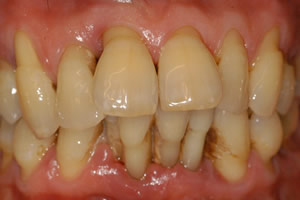 gums that recede and expose sensitive tooth root areas, and persistent bad breath.
• Periodontitis – This advanced stage of gum disease includes infectious bacteria that cause the gums to be red and tender all the time. In addition to the symptoms of previous stages of gum disease, pus pockets form at the base of some teeth. Some teeth will loosen as bacteria attack the structures that support tooth roots. Eventually, teeth will require removal. Even worse, this potent bacteria can enter the bloodstream through tears in diseased gum tissues. This has been found to trigger internal inflammation that has been found to contribute to the severe health problems mentioned prior (heart disease, arthritis, etc.).
I believe if the general population were more aware of the sequence that leads to full-blown gum disease, we’d have healthier adults, far less people who wear dentures or partials, and people who are enjoying confident smiles. If you are experiencing symptoms of gum disease, please remember that these will only worsen when treatment is delayed.
I hope I’ve provided a helpful explanation of how oral bacteria progresses and how it effects your oral and overall health. For an examination to assess the health of your gums along with recommended treatment options, call 828-274-9440 to arrange a consultation appointment. We will discuss your current situation and potential treatment options.
Is It Your Bad Breath They’ll Remember?
Posted on Jan 05, 2017 by William J. Claiborne, DDS MS
Business Insider says you have just 7 seconds to make a first impression. (http://www.businessinsider.com/only-7-seconds-to-make-first-impression-2013-4). That’s not a lot of time, but just enough to make a lasting impression. If you’ve ever met someone who has bad breath, that memory seems to stand out far more than if they had a piece of spinach in their teeth, for example.
No one wants to be associated with bad breath. If you suspect you have bad breath, you probably do. We all have occasional bad breath, but frequent bad breath is a symptom of periodontal disease. This is often accompanied by tender gums that bleed when brushing. As the disease progresses, your gums will darken in color and recede from teeth. Without treatment, teeth will eventually loosen and may require removal.
However, occasional bad breath has one origin – oral bacteria. Accumulated oral bacteria are the source of about every problem that occurs in your mouth. A few simple measures can help you keep oral bacteria to a minimum an enjoy the confidence of fresh breath and being close with others.
Oral bacteria are living, eating and reproducing organisms that thrive on rotting food in the mouth. As they accumulate, a sticky film known as plaque forms. If not brushed away daily, plaque hardens on teeth into tartar (or calculus). This cement-hard form of bacteria attacks tooth enamel and eats away at tender gum tissues.
When gum disease is the source of persistent bad breath, it produces a foul odor in the mouth even shortly after brushing. Gum chewing and mints may temporarily camouflage the odor, but not for long. Because the tissues in the mouth are continuously being destroyed, the lingering odor prevails, even after brushing.
Dry mouth is a contributing factor to bad breath, primarily because oral bacteria can rapidly reproduce when not regularly cleansed away through saliva. Saliva is designed to sweep bacteria from the mouth on a consistent basis. Without sufficient saliva flow, bacteria are able to accumulate at a more rapid pace.
Some causes for dry mouth are smoking, certain illnesses, snoring, mouth-breathing, and side effects of some medications. Drinking alcohol and caffeinated beverages are also drying to the mouth. The aging process can leave adults with insufficient saliva flow as well.
When you feel your mouth is dry, the ideal aid to saliva is drinking filtered water. Water is the perfect beverage when it comes to supporting your oral health. It also helps to keep your body hydrated, which aids in its overall function. Chewing sugarless gum is another way to help saliva flow and advised after meals when brushing is not possible.
The tongue is another source of oral bacteria. With its tiny grooves, bacteria embed in the tongue and enjoy a warm, moist haven for reproduction. This is why using a tongue scrapper daily or brushing the tongue with your tooth brush can significantly reduce the amount of bacteria in your mouth. Be sure to get to the back of the tongue where the majority of oral bacteria are embedded.
The bottom line to having fresh breath is to control the bacteria levels in your mouth. Begin with a clean mouth through your six-month dental cleanings and exams. These appointments help to remove buildup that has accumulated between visits, reducing the amount of bacteria in the mouth.
Then, renew your commitment for a thorough at-home regimen. Brush for at least two minutes twice daily, floss daily and use a tongue scraper or brush your tongue. Drink lots of water throughout the day. Avoid sugary treats and drinks since bacteria are super-charged by sugars and carbohydrates. Limit caffeine and quit smoking. Swish after eating or drinking, especially caffeinated or alcoholic beverages, to counteract drying effects.
Love your mouth and your reward will be fresh breath and a healthy smile. If your breath is frequent or you are seeing blood in the sink when brushing, call 828-274-9440 to schedule an appointment. Gum disease will only worsen without treatment.
Smokers – Why Your Smile Needs You To Quit!
Posted on Dec 13, 2016 by William J. Claiborne, DDS MS
The new year is right around the corner. For many Americans, we are contemplating New Year’s Resolutions. Common resolutions are losing weight, getting fit and to quit smoking.  For those who smoke, the beginning of a new year is a good place to reclaim their health.
If you smoke, however, you probably don’t feel like another lecture about its hazards. In our office, we pride ourselves on being a ‘lecture-free zone,’ so you won’t get one here. However, as a Periodontist, I probably have a better picture of what it’s doing inside your mouth so allow me a minute to give you that information. No lectures, though — promise.
When it comes to your smile, smokers have a greater risk of periodontal (gum) disease, more frequent bad breath, higher plaque levels, stained teeth, and slower healing following extractions, gum treatment and oral surgery.
Smoking has a drying effect on oral tissues, which provide an ideal environment for oral bacteria to breed. As oral bacteria accumulate in the mouth, the infectious bacteria inflame the gum tissues. This is the beginning of gum disease.
In early stages, gum disease causes persistent bad breath, sore gums and gums that bleed easily when brushing. As it progresses, gum tissues darken in color and pus pockets form at the base of teeth. Eventually, oral bacteria attack supporting bone and tissues surrounding tooth roots, causing teeth to loosen. It’s no surprise that gum disease is the nation’s leading cause of adult tooth loss.
Losing teeth is very detrimental to your overall health. Although some people assume that losing natural teeth is a ‘normal’ part of the aging process, studies now show that people who wear dentures die an average of ten years earlier than those with natural teeth. Denture wearers take more medications, have more gastrointestinal problems and are less socially involved.
On average, smokers decrease life expectancy by 10–15 years. Smoking is attributed to nearly one-third of all cancer diseases and deaths. Pregnant women who smoke have an increased risk for first-trimester spontaneous abortion, preterm births, low birth weight babies and sudden infant death syndrome (SIDS). Women who smoke are at risk for early menopause while men who smoke have a higher risk of impotency.
For those who decide to kick the habit, the positive effects are almost immediate. In 48 hours, damaged nerve endings start to regrow. The sense of smell and taste begin to return to normal. In 3 days, the lungs begin to repair and breathing is easier and with fuller air intake. Within 2 weeks, blood circulation in your gums and teeth is similar to that of a non-smoker. Your heart attack risk is now also declining. In a month or so, your circulation greatly improves, walking is easier and your chronic cough is gone.
The incentive to quit, for some adults, is because they realize their loved ones are breathing in their ‘second-hand smoke.’ Second hand smoke contains no less than 50 known carcinogens and other harmful chemicals. Children of smoking parents commonly wake up with ‘smoker’s cough.’
Rather than lecture, we believe it is more helpful to share the facts so adults can choose as they feel best. Some smokers accept the risks for the sake of their habit, and that’s their right. However, for those who truly wish to overcome this addiction, there are excellent online sources.
A good one is: http://smokefree.gov/
Best of luck in your 2017 goals!
Recent Posts
Categories
Archives
- September 2024
- August 2024
- July 2024
- June 2024
- May 2024
- April 2024
- March 2024
- February 2024
- January 2024
- December 2023
- November 2023
- October 2023
- September 2023
- August 2023
- July 2023
- June 2023
- May 2023
- April 2023
- March 2023
- February 2023
- January 2023
- December 2022
- November 2022
- October 2022
- September 2022
- August 2022
- July 2022
- June 2022
- May 2022
- April 2022
- March 2022
- February 2022
- January 2022
- December 2021
- November 2021
- October 2021
- September 2021
- August 2021
- July 2021
- June 2021
- May 2021
- April 2021
- March 2021
- February 2021
- January 2021
- December 2020
- November 2020
- October 2020
- September 2020
- August 2020
- July 2020
- June 2020
- May 2020
- April 2020
- March 2020
- February 2020
- January 2020
- December 2019
- November 2019
- October 2019
- September 2019
- August 2019
- July 2019
- June 2019
- May 2019
- April 2019
- March 2019
- February 2019
- January 2019
- December 2018
- November 2018
- October 2018
- September 2018
- August 2018
- July 2018
- June 2018
- May 2018
- April 2018
- March 2018
- February 2018
- January 2018
- December 2017
- November 2017
- October 2017
- September 2017
- August 2017
- July 2017
- June 2017
- May 2017
- April 2017
- March 2017
- February 2017
- January 2017
- December 2016
- November 2016
- October 2016
- September 2016
- August 2016
- July 2016
- June 2016
- May 2016
- April 2016
- March 2016
- February 2016
- January 2016
- December 2015
- November 2015
- October 2015
- September 2015
- August 2015
- July 2015
- June 2015
- May 2015
- April 2015
- March 2015
- February 2015
- January 2015
- December 2014
- November 2014
- October 2014
- September 2014
- August 2014
- July 2014
- June 2014
- May 2014
- April 2014
- March 2014
- February 2014
- January 2014
- December 2013
- November 2013
- October 2013
- September 2013
- August 2013
- July 2013
- June 2013
- May 2013
- April 2013
- March 2013
- February 2013
- January 2013
- December 2012
- November 2012
- October 2012
- September 2012
- August 2012
- July 2012
- June 2012
Blog banner widget
