Header logo

header top contact widget
 call us at
Dry Mouth
Smokers Add Challenges To Dental Implant Success
Posted on Aug 09, 2016 by William J. Claiborne, DDS MS
Not only does smoking complicate the body’s natural ability to heal, it is a particular challenge to oral tissues. The chemicals in cigarette smoke have a drying effect on the gum and decreases blood oxygen levels. This results in slower healing and can lead to a greater risk of bacterial build-up.
In implant placement, both gum tissue and bone are involved in the process. Through gum tissues, I position each implant in the upper or lower jaw bone at a precise depth and angle.
Once the implant is placed, it requires a healing period as the bone grows around it, securing it in place. This process is known as ‘osseo-integration.’ Proper healing requires normal blood circulation and sufficient oxygen levels. Implant failures occur most often during this phase when the bone is growing around the implant.
In addition to smoking’s effects on the rate of tissue and bone recovery, smoking patients can develop a condition known as peri–implantitis. Peri-implantitis leads to inflammation around the implant site and pockets of pus that form in gum tissues. Although the potential to develop peri–implantitis exists for any dental implant patient, smokers have a substantially higher risk.
When smokers develop infections after implant surgery, medications used to combat the infection have a reduced effect. This is because the potency of antibiotics does not work as well on smokers. When infection is not eliminated before it can work its way into the implant area, the risk for losing the implant is significant.
Keep in mind that an implant that must be removed due to the healing complications of smoking is not refundable. This means that the investment you made has gone up in smoke – cigarette smoke.
So many negative effects from smoking make it highly advisable to stop smoking prior to implant placement. If you don’t stop, you can increase your potential for success somewhat by reducing your smoking by half at least one week prior to your placement procedure and throughout the healing period.
Having dental implants allows you to eat the foods you love again and restores eating comfort and smiling confidence. The many benefits you’ll reap with dental implants are well worth kicking the habit. Call 828-274-9440 to schedule a consultation to discuss your potential for a successful outcome.
You Can Help Your Dental Implant’s Success
Posted on Jul 14, 2016 by William J. Claiborne, DDS MS
Over the years, the design and placement process of Dental Implants have been so perfected that they’ve come to hold one of the highest success rates of all in-bone implant types – nearly 97%.
One of the reasons that Dental Implants are such a wise investment is that they are designed to last your lifetime. However, there is a potential for failure. Like any procedure that involves an implant in human bone (including hip, knee, etc.), there is an element of risk.
Having an implant removed due to infection or malfunction is difficult for the patient. Although it’s not a frequent occurrence, removing an implant means the patient has lost their investment and must endure additional procedures and expenses for repair and replacement. How can you help to minimize this risk?
One of the most important factors in any successful medical or dental procedure begins with the doctor who coordinates your care. Your doctor should never be selected based on the lowest fee. The doctor chosen should have extensive training and experience in the diagnosis and placement of all types of Dental Implant systems. This enables him or her to select an implant that is appropriate for your individual needs.
In selecting the doctor who will oversee your treatment, you should also look for advanced skills in the placement of your implants. Successful placement relies on the ability to assess for adequate bone mass to support an implant without interfering with adjacent structures. The ability to select the proper implant type for available bone depth is equally important.
Without proper placement in sufficient bone, an implant risks coming in contact with a nerve that extends horizontally through the lower jaw. Upper implants placed too close to the sinus cavity can, over time, penetrate that area. Removing an implant in either of these situations, of course, is no simple task.
Obviously, a qualified doctor can enhance your potential for a successful outcome. This is why many people rely on a periodontal specialist. A Periodontist has particular expertise in the diagnosis and placement of all types of Dental Implants. As a matter of fact, many general dentists prefer to have a Periodontist place implants in their patients. The patient then returns to their dentist for the attachment of teeth to the implants.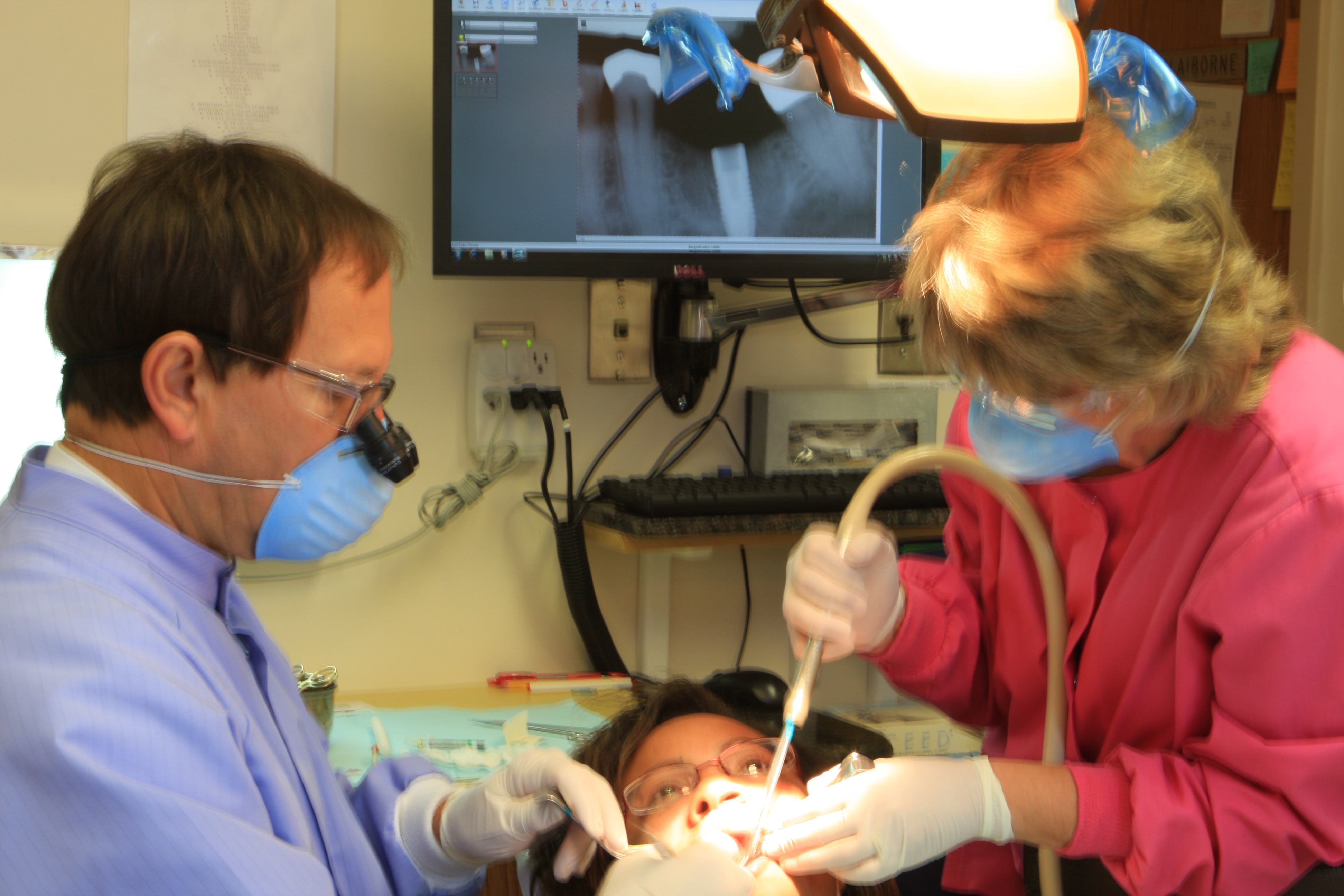
While the doctor involved in your treatment is important, much of the risk falls into the patient’s hands after the placement process.
As a patient, helping to have a successful outcome begins as soon as your implants are placed. First, closely follow your post-placement instructions. For a few days following placement, most patients are advised to eat only cool, soft foods. This helps to minimize swelling and bleeding, which helps gum tissues to more quickly seal incision sites. This can lower your risk for infection.
Once home, other factors can also place your implants at risk. For example, smokers have a higher risk for implant failure. Because the chemicals in cigarette smoke are very drying to oral tissues, the healing process takes longer. Delayed healing creates a greater risk for infection to occur.
An element of risk that may surprise you is grinding or clenching teeth during sleep, which is typically a symptom of a misaligned bite. Some clenching is so intense the force can be likened to that used to crack a walnut. A sign of night-time clenching or grinding may be worn, chipped or broken teeth. However, even without signs, if you suspect you grind or clench, mention this to your implant dentist prior to treatment. This way, proactive measures can be taken to resolve the problem before complications result.
Most important of all is the patient’s commitment to maintaining good oral hygiene. Although Dental Implants themselves do not experience decay, the gum tissues and bone supporting the implants are as susceptible to oral bacteria as before. When oral bacteria infection (gum disease) penetrates to the implant site positions, the only way to treat the infection may require removing the implant.
Having Dental Implants will require you to be highly committed to your oral hygiene at home. Additionally, your dental check-ups will likely be scheduled for every four months than twice a year. During these visits, a hygienist will remove accumulated oral bacteria to reduce risk to your Dental Implants. The condition of your gums will also be assessed.
At Biltmore Periodontics, we are very proud of our success rate. When our patients regain the ability to bite, chew and laugh with confidence, we celebrate right along with them. Our goal, for every patient, is to have each enjoy confident smiles for a lifetime!
If you’ve considered Dental Implants, let’s discuss the types that may be best for you. Call 828-274-9440 to schedule a consultation appointment. I’ll explain the process and answer your questions thoroughly.
A Clean Tongue Creates A Healthy Mouth
Posted on Jun 30, 2016 by William J. Claiborne, DDS MS
The tongue is defined as: “the fleshy muscular organ in the mouth of a mammal, used for tasting, licking, swallowing, and (in humans) articulating speech.” It is also essential for efficient chewing by helping to move food around in the mouth.
The tongue is a pretty useful organ and is rarely at rest. However, it is important to think of the tongue just as you would other structures in your mouth. Just as it is necessary to keep the teeth and gum tissues clean, the condition of the tongue can play a significant role in supporting good oral health.
The tongue is a muscle covered with moist, pink tissue called mucosa. Tiny bumps called papillae give the tongue its rough texture. Thousands of taste buds cover the surfaces of the papillae.
As useful as the tongue is, it can also be a tremendous breeding ground for oral bacteria. Think about it, the tongue provides tiny hiding places for bacterial growth in an ideal environment – warm, moist and dark.
While saliva helps to rinse some of the bacteria from the mouth, it doesn’t have the ability to dislodge bacteria embedded in the tongue’s grooves. Oral bacteria tends to breed rapidly. And, when sugar or carbohydrates are consumed, their growth is accelerated even further.
An accumulation of oral bacteria in the mouth can literally be felt by running the tongue over the teeth. At the end of the day, you can probably feel a film in the mouth. This sticky film is known as plaque, which is oral bacteria that has accumulated since your morning brushing.
The tongue can help you keep oral bacteria levels to a minimum. In addition to twice daily brushing and daily flossing, brush your tongue with your toothbrush following tooth brushing at least once a day. If this is uncomfortable, consider purchasing a tongue scraper (available at most drug stores). Scrap from the back forward, rinsing after each pass.
Even though the rear portion of the tongue seems smooth and less likely to harbor bacteria, the most dense amount are actually embedded there. To uproot the little critters, be sure to reach that area (try to go no further than what makes you gag).
A mouth wash that kills germs without containing alcohol (which can dry out oral tissues), can also help. Also, drink plenty of water throughout the day to help keep oral tissue moist and limit sweets and carbs – for the good of your smile AND your waistline!
When plaque is not removed daily, it begins to harden on the surfaces of teeth. This is referred to as tartar or calculus. This is what makes your gums tender during your oral hygiene visits and what the hygienist is scrapping off teeth. Calculus cannot be brushed or flossed away, so your 6-month cleanings are the only way to eliminate this hardened form of bacterial buildup in the mouth.
Oral bacteria is the cause of bad breath, tender gums that bleed easily when brushing, cavities, gum disease and the nation’s leading cause of adult tooth loss. Simple measures each day can significantly enhance your potential to avoid problems, and the expenses associated with repairing them.
If you are experiencing bleeding gums, you already have gum disease. This will not go away without treatment. Call 828-274-9440 to arrange an exam at your earliest convenience.
Dental Fear & Gum Disease In The U.S.
Posted on May 25, 2016 by William J. Claiborne, DDS MS
In dentistry, caregivers are always encouraging you to be committed to your 6-month exams and cleanings. These periodic visits help to remove buildup that can lead to damage to teeth and gum tissues. Too, they are often able to catch small problems while treatment needs are still minimal.
It is very difficult, however, to coax a fearful patient into a dental office. Typically, many avoid regular care and only force themselves into a dental chair because they are in pain. By this time, many treatment needs are more involved, more costly and require greater treatment time. This tends to acerbate the problem, merely adding to their dread of dental visits.
It is estimated that up to 75% of American adults have some level of fear associated with dental visits. This is a huge number! So, as a Periodontist, it’s no surprise that nearly half of the adults in the U.S. have some level of periodontal (gum) disease.
Even a thorough oral hygiene routine at home misses bacteria on occasion. When oral bacteria are not quickly removed by thorough brushing and flossing, they amass together and form a cement-hard colony that attaches to tooth surfaces. This accumulation of bacteria reproduces rapidly as they eat away at tooth enamel and gum tissues.
This hardened mass of bacteria is known as calculus, or tartar. It can only be removed by special instruments used in a dental office by a dentist or dental hygienist. If not removed, it continues to thrive and expand.
As oral bacteria consume gum tissues, inflammation begins. This causes tender gums that bleed when brushing. As it progresses, you may notice persistent bad breath and gums that darken to red versus a healthy pink color. Gum tissues may recede, exposing sensitive areas of tooth roots.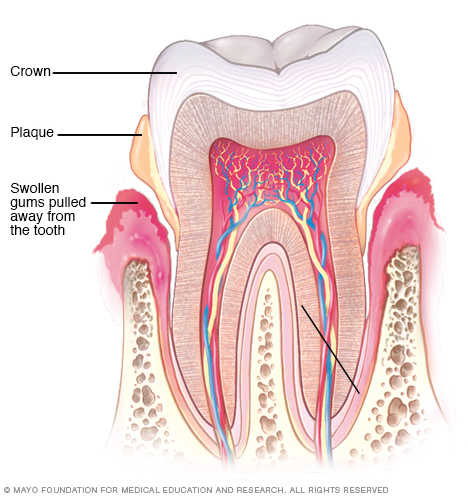
Eventually, the infectious bacteria will penetrate the gums and attack below the gum line. This is when the inflammation can damage the bone structures that support tooth roots. Pus pockets may also form on gums and teeth may loosen. As a matter of fact, periodontal disease is the nation’s leading cause of adult tooth loss.
While people who avoid dental visits may try to be ultra-diligent in their home-care routine, it’s easy to be susceptible to oral bacteria. A number of factors heighten your vulnerability, including dry mouth and what you eat.
Dry mouth occurs due to a wide range of factors. Some medications have a drying affect on the mouth. Certain foods and beverages contribute to dry mouth, especially those containing caffeine and alcohol. Smoking is very drying to oral tissues. And, the aging process leaves us with drier mouths.
Eating sugary foods and many carbohydrates are just as detrimental to your oral health. Many Americans snack during the day, often on chips, crackers and candy bars – which are then washed down with sugary sodas. All this converts into a sugar based super-food in the mouth that provides oral bacteria with sustenance that super charges their reproduction.
So, even as a twice-daily brusher and daily flosser, you are not immune from developing gum disease. Avoiding regular dental check-ups is a sure recipe for needing treatment down the road that may have easily been prevented.
How does a fearful adult overcome their problem so they can have the dental care they need? I believe it begins with a conversation. This time together helps us to understand the background to your fears — when they began, how long you’ve had them, etc. I’ll explain the various comfort options that will help to relax you as well as ‘signals’ you can do to indicate you’d like a break.
When many fearful patients understand they are in control of their care, they are more willing to have the care they need. However, it is equally important that they develop a sense of trust with their caregivers. Feeling that the goal is to help them avoid uncomfortable sensations should be evident throughout each visit.
When more adults are able to release their fears and have the dental care they need, we will hopefully see a nation of healthier smiles and less tooth loss. Until then, encourage fearful individuals you know to consult with dentist after dentist until they find one they feel is sensitive to their unique needs.
In our office, consults are held in a private consultation room that’s removed from the clinical side of the practice. Here, we sit in a living room-like setting to discuss your specific needs and options that are recommended for your goals.
Call 828-274-9440 to schedule a time when we can meet.
Recent Posts
Categories
Archives
- September 2024
- August 2024
- July 2024
- June 2024
- May 2024
- April 2024
- March 2024
- February 2024
- January 2024
- December 2023
- November 2023
- October 2023
- September 2023
- August 2023
- July 2023
- June 2023
- May 2023
- April 2023
- March 2023
- February 2023
- January 2023
- December 2022
- November 2022
- October 2022
- September 2022
- August 2022
- July 2022
- June 2022
- May 2022
- April 2022
- March 2022
- February 2022
- January 2022
- December 2021
- November 2021
- October 2021
- September 2021
- August 2021
- July 2021
- June 2021
- May 2021
- April 2021
- March 2021
- February 2021
- January 2021
- December 2020
- November 2020
- October 2020
- September 2020
- August 2020
- July 2020
- June 2020
- May 2020
- April 2020
- March 2020
- February 2020
- January 2020
- December 2019
- November 2019
- October 2019
- September 2019
- August 2019
- July 2019
- June 2019
- May 2019
- April 2019
- March 2019
- February 2019
- January 2019
- December 2018
- November 2018
- October 2018
- September 2018
- August 2018
- July 2018
- June 2018
- May 2018
- April 2018
- March 2018
- February 2018
- January 2018
- December 2017
- November 2017
- October 2017
- September 2017
- August 2017
- July 2017
- June 2017
- May 2017
- April 2017
- March 2017
- February 2017
- January 2017
- December 2016
- November 2016
- October 2016
- September 2016
- August 2016
- July 2016
- June 2016
- May 2016
- April 2016
- March 2016
- February 2016
- January 2016
- December 2015
- November 2015
- October 2015
- September 2015
- August 2015
- July 2015
- June 2015
- May 2015
- April 2015
- March 2015
- February 2015
- January 2015
- December 2014
- November 2014
- October 2014
- September 2014
- August 2014
- July 2014
- June 2014
- May 2014
- April 2014
- March 2014
- February 2014
- January 2014
- December 2013
- November 2013
- October 2013
- September 2013
- August 2013
- July 2013
- June 2013
- May 2013
- April 2013
- March 2013
- February 2013
- January 2013
- December 2012
- November 2012
- October 2012
- September 2012
- August 2012
- July 2012
- June 2012
Blog banner widget
